
The Wellness Garden: Building Yoga Decks & Meditation Nooks
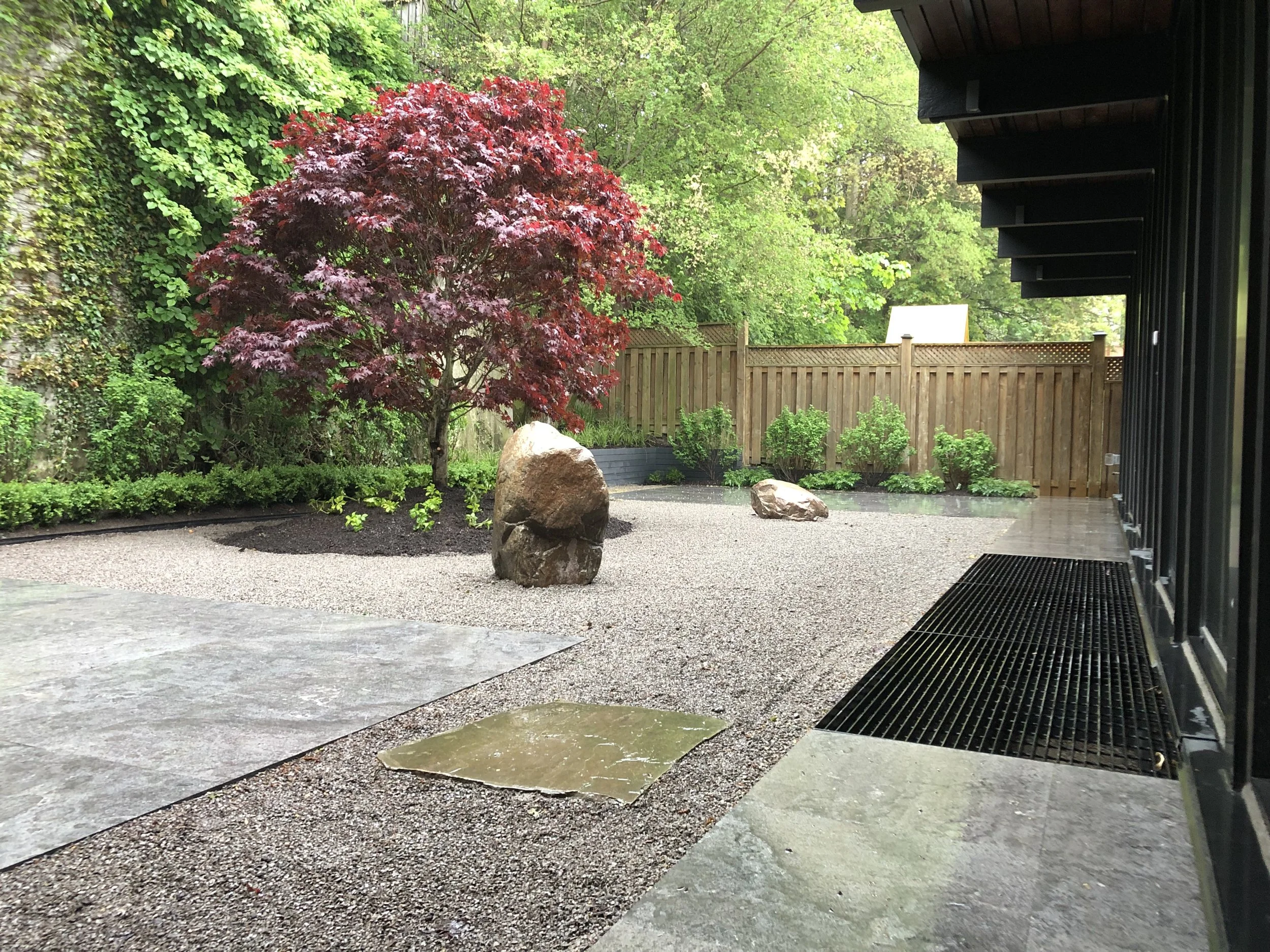
For years, the backyard was seen as a place to entertain others—a spot for BBQ parties and kids' playdates. But the biggest shift we are seeing in wellness garden design in Toronto for 2026 is the move toward "The Sanctuary."
Homeowners are increasingly asking for spaces designed for themselves—secluded corners for morning yoga, meditation, or simply decompressing after a high-stress week in the city.
A wellness garden isn't just about planting pretty flowers; it is about psychological architecture. It requires a specific combination of stability, sensory engagement, and acoustic privacy. Here is how Tekton designs these personal retreats.
1. The Foundation: The "Floating" Yoga Deck
You cannot find your center if you are wobbling on uneven patio stones. For a true yoga or meditation practice, the surface is everything.
We move away from cold, hard stone for these specific zones. Instead, we design dedicated backyard yoga decks using warm, natural timber.
The Material: We use smooth-sanded Ipe or Select Cedar. Unlike composite (which can get scorching hot in the sun) or stone (which is unforgiving on the knees), natural wood has "give" and stays at a comfortable temperature.
The Construction: We often build these as "floating" platforms, slightly elevated (4-6 inches) off the ground. This visual separation psychologically distinguishes the "Wellness Zone" from the rest of the patio. It signals to your brain: This is a separate space.
2. The Sensory Palette: Lavender, Salvia, and Silence
A sensory garden design engages more than just the eyes. To lower cortisol levels, we need to engage scent and touch.
In Toronto’s climate, we rely on a specific palette of "aromatherapy" plants that thrive in our zone:
Scent (The Relaxers): We mass-plant Lavender (Munstead or Hidcote) and Russian Sage around the perimeter of the deck. When the sun hits these oils, they release a calming fragrance.
Touch (The Textures): We incorporate soft, flowing plants like Silver Mound (Artemisia) or Lamb’s Ear.
Visuals (The Focus): We use Salvia (Caradonna) for its deep, vertical purple spikes. The repetition of vertical lines is proven to be calming to the human eye, unlike a chaotic mix of wildflowers.
3. Acoustic Privacy: The Water Feature "White Noise"
In Toronto, true silence is impossible. You will always hear the hum of the Gardner Expressway, a lawnmower down the street, or a siren in the distance.
To create a meditation garden landscape that feels secluded, we don't try to eliminate city noise; we mask it.
The Science of White Noise: We install architectural water features—specifically "sheer descent" waterfalls or bubbler rocks—tuned to a specific frequency.
The Result: The constant, consistent sound of falling water creates a "sound curtain" that drowns out the intermittent, distracting noises of the neighborhood. It allows you to stay in a meditative state without being jolted by a car door slamming.
4. Visual Seclusion: The "Green Walls"
You can’t relax if you feel like you’re on a stage. Privacy is the final pillar of the wellness garden.
Instead of building a claustrophobic 8-foot fence, we use layered screening.
The "Soft" Screen: We use clumping bamboo (Fargesia) or columnar Beech trees to create a living wall that sways in the wind.
The "Hard" Screen: For immediate privacy, we install laser-cut Corten steel screens with organic, flowing patterns. These block the neighbor's view while letting filtered light dance across your yoga mat.
Your Daily Retreat
You don't need to drive to Muskoka to find peace. You just need to design for it.
By combining a stable timber platform, calming sensory plants, and acoustic water features, we can turn an unused corner of your backyard into a daily wellness retreat.
Contact Tekton Landscapes to start designing your sanctuary for Spring 2026.